
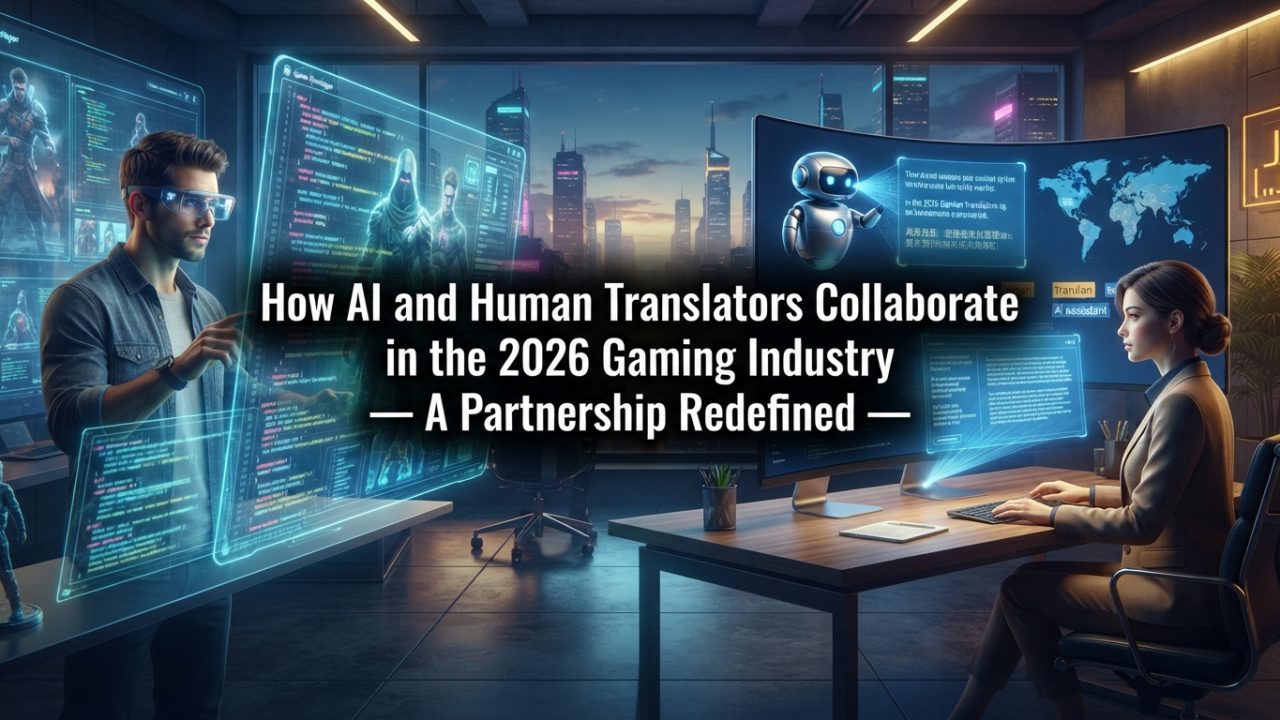
The gaming industry in 2026 has completely transcended past limitations as artificial intelligence and smart computing systems join forces with human translation expertise through innovative modern workflows like the Red Pill Framework. In the past, game translation frequently suffered from delays, taking months to translate scripts, or failing because standalone AI could not accurately interpret humor and niche cultural nuances 100% of the time. Today, these challenges have been resolved by a hybrid operational model that perfectly blends raw speed with emotional refinement.
This collaboration does not replace humans; rather, it elevates the role of professional translators into “Linguistic Directors” responsible for screening accuracy, maintaining character consistency, and preserving tone of voice throughout the entire game. Meanwhile, AI handles massive scripts to support the rapid rollout of emergency patches or seasonal DLCs within mere days. This article delves into the behind-the-scenes success of the AI-human synergy, showing how it dismantles language barriers and delivers blockbuster entertainment experiences simultaneously to gamers worldwide.
Maintaining Narrative Continuity and Consistent Character Tone Throughout the Game
One of the greatest challenges in game translation is preserving the distinct personalities and tones of individual characters without breaking characterization. When artificial intelligence and human translation teams collaborate, the system is programmed to memorize character glossaries and style guides. This ensures that no matter where a character appears in a scene, their signature humor or stern demeanor remains entirely consistent with the original source material.
Managing Schedules and Rapid Patch & DLC Updates
In an era where modern games frequently roll out downloadable content (DLC) or seasonal events at a rapid pace, game developers can no longer afford to rely on traditional translation pipelines that take months to complete. The hybrid workflow powered by the Red Pill Framework enables teams to translate and review new script batches within a matter of days, allowing gamers worldwide to experience fresh content simultaneously without experiencing delays.
Professional Translators’ Perspectives on Adapting to Intelligent Technologies
The arrival of artificial intelligence does not pose a threat to professional translators; rather, it elevates their roles to “Linguistic Directors” responsible for screening emotional accuracy, refining phrasing, and injecting a human soul into dialogue. Instead of spending all day typing out basic repetitive sentences, translators can fully unleash their creativity to breathe maximum life into the game’s world.
Why Standalone AI Is Insufficient for Modern Game Translation
Relying solely on artificial intelligence for game translation in 2026 cannot accurately capture 100 percent of the subtle humor, niche subcultures, or hidden jokes embedded within a narrative. Video game contexts are inherently complex and filled with specialized terminology that requires direct human experience to properly filter.
- The limitations of automated systems often result in overly literal translations that strip away the fun and flavor.
- Human gamer perspectives are far better at capturing emotional resonance and character nuances than computer systems.
- Blending modern tools with the wisdom of professional translators drastically reduces cultural missteps.
Behind the Red Pill Framework: The Secret Formula for Seamless Collaboration
Modern workflow systems have proven that the Red Pill Framework is the critical catalyst driving localization for major publishers and indie studios to the next level. This system processes massive volumes of data through Crowdin AI multi-LLM before rapidly handing it off to human specialists for final quality checks.
This hybrid operational model drastically slashes development cycles, enabling blockbuster titles to launch simultaneously worldwide without ever compromising linguistic quality.
A New Milestone in Gaming for Developers and Players Alike
The advent of intelligent technology does not come to steal human jobs; rather, it arms development teams with the capability to craft higher-quality works in shorter timeframes. As players, this means we get to experience dialogue that reads smoothly and naturally, allowing us to fully immerse ourselves in fantasy worlds just as the original creators intended.
This collaboration marks a historic turning point that permanently shatters language barriers in the gaming industry, forging tighter bonds across global player communities through exceptional gaming experiences.
Key Takeaways: The Synergy of AI and Human Localization in 2026
The collaboration between artificial intelligence and linguistic experts through the Red Pill Framework has completely revolutionized the 2026 gaming industry, pushing past historical limitations to deliver rapid, accurate, and emotionally resonant content.
- Overcoming Standalone AI Limits: Artificial intelligence cannot fully capture nuanced humor or subcultural contexts, necessitating human experience and emotion for proper refinement.
- Powered by the Red Pill Framework: Utilizes intelligent management systems via Crowdin AI multi-LLM to process massive scripts while maintaining consistent character tones and styles throughout the game.
- Handling Rapid Patches and DLCs: Reduces translation turnaround times from months to mere days, ensuring players worldwide enjoy new content together without delays.
- Elevating the Translator’s Role: Transforms standard text translators into “Linguistic Directors” who inject soul and natural flow into dialogue.
- Unifying Global Communities: Empowers game studios of all sizes to seamlessly deliver high-quality works to the global market.
Ultimately, fusing the velocity of automation with human refinement stands as the beating heart driving modern video game localization.